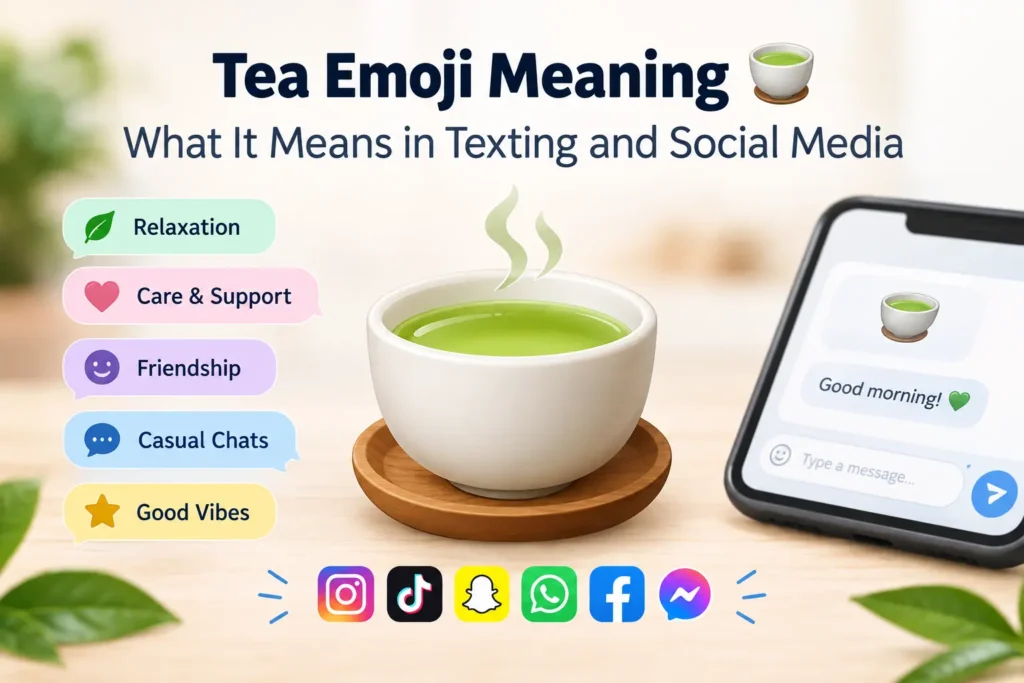
The 🍵 Tea Emoji represents relaxation, warmth, comfort, and peaceful moments. Often used to express a love for tea, cozy breaks, or self-care, it can also playfully hint at gossip or “spilling the tea” in online conversations.
The tea emoji 🍵 can represent a warm cup of tea, a relaxing break, or a cozy moment, but its meaning often goes beyond the drink itself. In online conversations, it can also connect to gossip, sharing interesting news, and the popular expression “spill the tea.”
If someone sends you 🍵 in a text message, you might wonder whether they are talking about an actual drink, inviting you to relax, or hinting that they have some juicy information to share. The surrounding conversation usually provides the best clue.
The tea emoji is especially useful because it can communicate different moods without requiring a long explanation. Friends might use it when discussing rumors, couples might share it during a quiet morning, and social media users might add it to posts about gossip or everyday routines.
However, 🍵 is not the same as every other tea-related symbol. The hot beverage emoji ☕, teacup without handle emoji 🍵, and other drink-related emojis can communicate slightly different ideas depending on how they are used.
In this article, you will learn what the tea emoji means, how people use it in texting, what it might mean when a girl or guy sends it, and how to understand its meaning in friendships, romantic relationships, and social media posts.
Tea Emoji 🍵 – Quick Answer
The tea emoji 🍵 represents tea, relaxation, cozy moments, and sometimes gossip or interesting news. In texting and social media, it can suggest that someone wants to share information, hear the latest drama, or enjoy a peaceful break.
Its meaning depends on context:
- Literal meaning: Drinking tea, making tea, or enjoying a warm beverage.
- Relaxation: Taking a break, having a quiet morning, or enjoying a cozy moment.
- Gossip: Discussing rumors, drama, or interesting personal news.
- Curiosity: Showing interest in what someone has to say.
- Hospitality: Offering someone a drink or creating a welcoming atmosphere.
- Social media humor: Reacting to drama or signaling that you are watching events unfold.
For example, if a friend texts, “Girl, I have news 🍵,” the emoji probably hints at gossip or an interesting story. If your mom sends, “Tea is ready 🍵,” it most likely refers to the actual drink.
What Does the Tea Emoji 🍵 Mean?
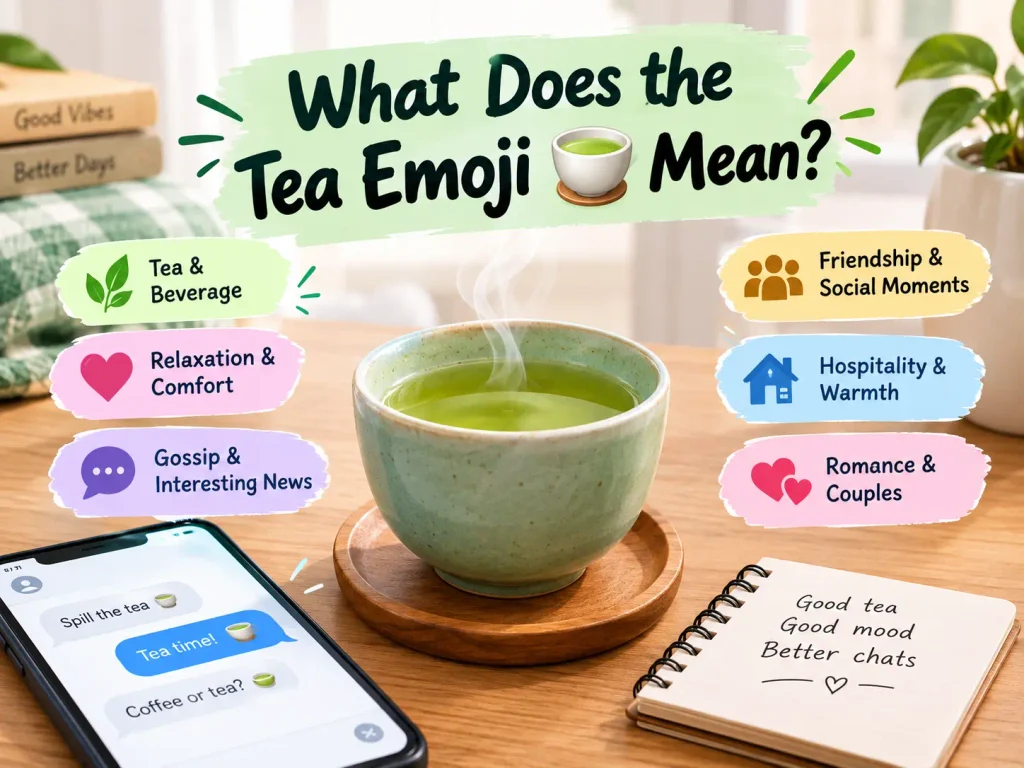
The tea emoji has a straightforward visual meaning, but its social meaning can change with the conversation. It shows a cup associated with tea, particularly green tea, and can suggest anything from enjoying a drink to discussing something interesting.
Here are the most common interpretations.
1. Drinking Tea or Enjoying a Beverage
The most direct meaning is tea itself. Someone might use 🍵 when talking about their morning routine, ordering a drink, visiting a café, or enjoying a cup at home.
Examples:
- “Making some green tea before work 🍵”
- “Anyone want tea?”
- “Finally sitting down with my favorite drink 🍵”
In these examples, there is no hidden message. The emoji simply illustrates the beverage.
2. Gossip and Interesting News
One of the most recognizable online uses of tea is connected to the expression “spill the tea.” This phrase means to share gossip, reveal interesting information, or tell someone what happened.
The 🍵 emoji can represent this idea, particularly when a conversation involves secrets, rumors, surprising news, or personal drama.
For example:
“Wait, what happened at the party? 🍵”
The sender may be asking for the full story and signaling that they are ready to hear the details.
The emoji can also communicate playful curiosity without implying that anyone has done something wrong.
3. Relaxation and Comfort
A cup of tea can evoke a peaceful moment, especially when paired with cozy imagery, rainy weather, books, or a quiet evening.
Someone might post:
“Rainy day, a good book, and tea 🍵📚”
Here, the emoji helps create a calm, comfortable atmosphere.
It can also suggest self-care, taking a break after a busy day, or enjoying a simple pleasure.
4. Hospitality and Thoughtfulness
Tea is often associated with welcoming guests and spending time together. As a result, 🍵 can communicate warmth and hospitality.
For example:
“Come over this weekend. I’ll make us some tea 🍵”
The sender is offering a drink, but the message can also suggest that they want to spend quality time together.
5. Playful Curiosity
Sometimes, the tea emoji is simply a fun way to show that someone is interested in what another person has to say.
Imagine a friend starts a message with, “You’re never going to believe this.”
Replying with “🍵👀” can mean that you’re paying attention and want to hear the rest.
This interpretation is especially common when the conversation already involves a surprising story or a dramatic announcement.
6. Aesthetic and Lifestyle Expression
The emoji can also appear in posts about matcha, Japanese-inspired aesthetics, cafés, wellness routines, food photography, and everyday lifestyle content.
In these settings, 🍵 may communicate a particular mood rather than a specific message.
For example, a matcha enthusiast might caption a photo:
“Slow mornings and matcha 🍵🌿”
The focus is on the drink and the atmosphere surrounding it.
What Does the Tea Emoji Mean in Texting and Chat?
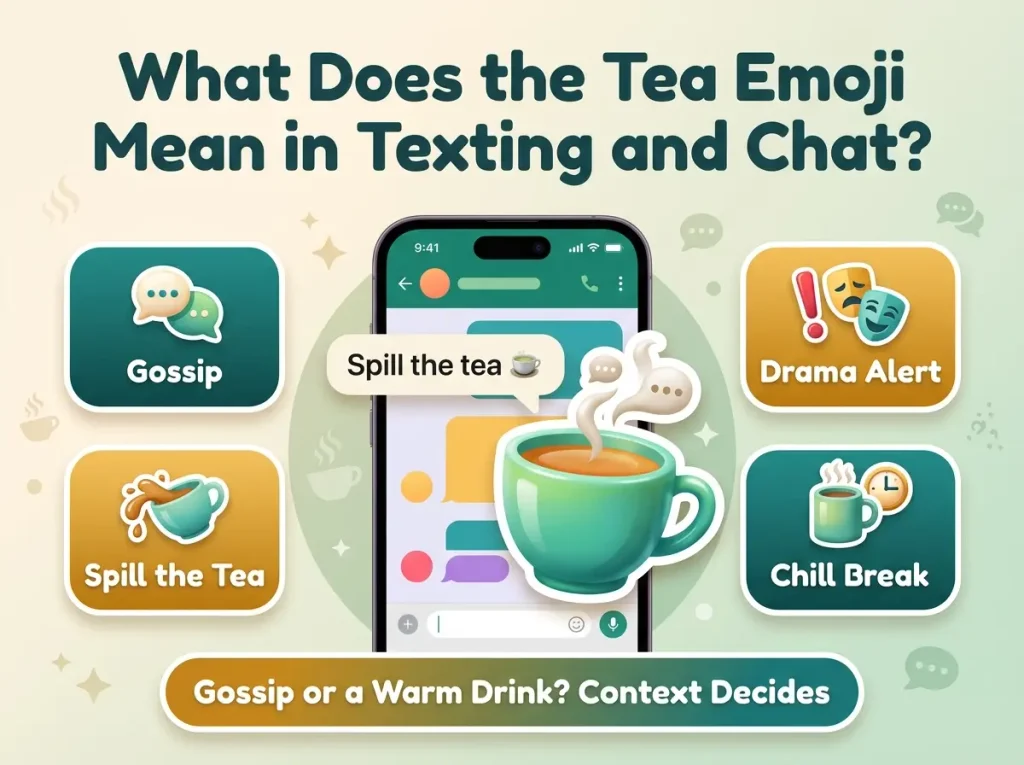
In texting, the tea emoji 🍵 can mean anything from “I’m drinking tea” to “Tell me what happened.” The message around it usually makes the intended meaning clear.
Here is how it can work in different types of conversations.
In Text Messages
Friends may use 🍵 to share everyday updates, react to gossip, or start a conversation about something interesting.
Example:
Emily: “You won’t believe who I ran into yesterday.”
Olivia: “Wait, tell me everything 🍵”
Meaning: Olivia is curious and wants to hear the story. The emoji adds a playful, gossip-related tone.
On WhatsApp
On WhatsApp, 🍵 can accompany a casual message about a drink, a family gathering, or news shared in a group chat.
For example:
“Mom made tea. Come downstairs 🍵”
This is a literal reference to tea.
In a friends’ group chat, however, someone might write:
“Okay, who’s ready for the latest update? 🍵”
Here, the emoji hints at gossip or an entertaining story.
In iMessage
In an iMessage conversation, 🍵 can make a short response feel more expressive.
For example:
Jake: “I finally finished that difficult project.”
Mia: “Now you deserve a relaxing evening 🍵”
The emoji suggests unwinding and enjoying some quiet time.
In Messenger and Online Chats
In online chats, the emoji can serve as a reaction to news, a playful invitation to share details, or a symbol of a cozy mood.
For example:
“There’s so much drama in that group chat 🍵”
This suggests that the sender finds the situation interesting and may want to discuss it.
In Direct Messages (DMs)
The meaning in DMs often depends on the relationship between the people involved.
A close friend might use 🍵 to encourage you to explain a situation. Someone you are dating might use it to suggest a relaxed conversation over tea.
For example:
“Want to catch up later? We can get tea 🍵”
This is most naturally interpreted as an invitation to meet for a drink, although the broader context can reveal whether the invitation has a romantic undertone.
What Does the Tea Emoji Mean From a Girl?
When a girl sends 🍵, she could be talking about tea, sharing a cozy moment, showing curiosity, or hinting that she wants to hear some gossip.
The emoji alone does not establish her intentions. The surrounding message and your relationship with her matter much more.
If She Sends 🍵 During Gossip
If she replies with “🍵” after you mention a surprising event, she may be encouraging you to continue.
For example:
Sarah: “I have a crazy story about what happened at work.”
Jessica: “I’m listening 🍵”
This suggests curiosity and enthusiasm.
If She Sends 🍵 When Talking About Her Day
She might be sharing a relaxing moment or telling you about something she is drinking.
For example:
“Finally home with my tea 🍵”
This usually communicates comfort or relaxation rather than a hidden romantic message.
If She Sends 🍵 to Someone She Likes
A girl might use the emoji to suggest a casual tea date or create a cozy atmosphere during a conversation.
For example:
“Maybe we should get tea together this weekend 🍵”
The invitation is the more meaningful signal here. Whether it is romantic depends on the relationship, the wording, and any other signs of mutual interest.
The key takeaway: 🍵 does not have a special meaning when sent by a girl. Read it in the same conversational context you would use for any other message.
What Does the Tea Emoji Mean From a Guy?
When a guy sends 🍵, he may be referring to an actual drink, inviting someone to relax, or reacting to interesting news.
The interpretation depends on what he is talking about rather than his gender.
If He Uses It While Sharing News
For example:
Ryan: “You’ll never guess what happened at the game.”
Alex: “All right, tell me 🍵”
The emoji adds a playful tone and signals interest in the story.
If He Sends It During a Casual Conversation
A guy might write:
“Long day. Time to make some tea 🍵”
This suggests that he wants to relax.
If He Suggests Getting Tea Together
For example:
“There’s a new tea shop downtown. Want to check it out with me? 🍵”
He is suggesting an opportunity to spend time together. It could be friendly or romantic, depending on your relationship and how the invitation is framed.
Remember: A guy using 🍵 does not automatically indicate attraction, flirtation, or a particular personality trait.
What Does the Tea Emoji Mean Between Friends?
Among friends, 🍵 often works as a symbol of gossip, curiosity, shared experiences, or casual hangouts.
Its informal tone makes it useful in conversations where people feel comfortable joking around.
Common friendship uses include:
- Asking a friend to share the latest news.
- Reacting to an unexpected story.
- Discussing social situations or harmless drama.
- Suggesting a relaxed meetup.
- Sharing a picture of a favorite drink.
For example:
Hannah: “I have an update about the concert last night.”
Lauren: “Girl, I’m ready. 🍵”
Lauren is expressing curiosity and excitement about hearing the details.
Friends can also use the emoji without any gossip involved.
“Movie night at my place? I’ll make tea 🍵”
Here, it suggests a relaxed and welcoming atmosphere.
What Does the Tea Emoji Mean in a Romantic Relationship?
In a romantic relationship, 🍵 can suggest a peaceful moment together, a casual date, or a desire to spend quality time with a partner.
It is not inherently a romantic emoji, but it can support a warm or affectionate message.
Sharing a Cozy Moment
A partner might text:
“Wish you were here. We’d be drinking tea and watching a movie 🍵❤️”
The tea emoji reinforces the cozy scene, while the heart makes the affection more explicit.
Inviting a Partner on a Date
For example:
“Want to try that little tea shop we talked about? 🍵”
This suggests spending time together in a relaxed setting.
Talking About Relationship Drama
The emoji may also appear when partners discuss an interesting situation involving mutual friends.
For example:
“Okay, tell me what happened after I left 🍵”
This is an invitation to share details, not necessarily a sign of jealousy or suspicion.
Does 🍵 Mean Someone Is Flirting?
Not by itself.
A tea invitation could be a date, but it could just as easily be a friendly meetup. Look at the wording, the history between you, and whether the person expresses interest in other ways.
If the message is ambiguous, asking a simple follow-up question is more reliable than trying to decode the emoji alone.
What Does the Tea Emoji Mean in a Family Conversation?
In family messages, 🍵 most often refers to drinking tea, sharing food, welcoming relatives, or spending time together.
A parent might send it to let everyone know that tea is ready. A sibling might use it to suggest catching up, while a grandparent might use it to accompany a picture of a favorite drink.
Example:
Mom: “Come sit with me for a few minutes. Tea is ready 🍵”
Emma: “Coming!”
Meaning: The emoji reinforces the invitation to share a drink and spend time together.
Family members can also use 🍵 when discussing a funny family story or an upcoming gathering. In those cases, its meaning depends on the conversation rather than the family relationship itself.
What Does the Tea Emoji Mean on Social Media?
On social media, 🍵 can represent a drink, a lifestyle aesthetic, gossip, or an audience’s curiosity about a developing situation.
Its meaning changes depending on whether it appears in a caption, comment, story, or private message.
On Instagram, the tea emoji can appear in café photos, matcha posts, morning routines, and captions about relaxing.
It can also appear in comments about celebrity news, creator controversies, or everyday drama.
For example:
“Sunday reset 🍵📖”
This suggests a peaceful routine.
A comment such as “Wait, what happened? 🍵” instead communicates curiosity.
TikTok
On TikTok, 🍵 may accompany videos about storytelling, personal experiences, celebrity discussions, and online drama.
A creator might use it in a caption to hint that a video contains interesting details or a story worth hearing.
However, the emoji does not automatically indicate that a video contains gossip. The caption and video itself provide the relevant context.
Snapchat
On Snapchat, 🍵 can be used in private conversations to ask for updates or react to something surprising.
For example:
“Send me the rest of the story 🍵”
It can also appear in a photo of a drink or a relaxing moment.
On Facebook, the emoji may appear in posts about tea, family gatherings, lifestyle routines, or conversations about trending topics.
In a group discussion, it can signal that someone is interested in hearing more details.
WhatsApp Statuses and Instagram Stories
In stories and status updates, 🍵 often serves as a compact visual cue.
A picture of a cup with “Needed this today 🍵” suggests relaxation or comfort.
A text-only status such as “I’ve got a story to tell 🍵” suggests that the person has something interesting to share.
Important distinction: Social media slang can evolve quickly. The tea emoji does not have one universal meaning across every community or platform.
Real Conversation Examples: How People Use 🍵
The easiest way to understand the tea emoji is to see how it works in everyday conversations. The same symbol can communicate curiosity, comfort, or a simple invitation depending on the words around it.
Example 1: Friends Sharing Gossip
Emily: “Did you hear what happened at the party last night?”
Olivia: “No! Tell me everything 🍵👀”
Meaning: Olivia wants to hear the story. The tea emoji signals curiosity and playful interest in the latest news.
Example 2: A Romantic Conversation
Ryan: “We should try that new tea shop downtown.”
Madison: “I’d love that 🍵❤️”
Meaning: Madison is responding positively to the invitation. The heart adds affection, while the tea emoji relates to the planned activity.
Example 3: Family Time
Mom: “I’m making tea. Want a cup?”
Emma: “Yes, please! 🍵”
Meaning: The emoji refers to the drink and keeps the exchange friendly and casual.
Example 4: Offering Support
Daniel: “Today has been exhausting.”
Sophia: “Take a break and make yourself some tea 🍵”
Meaning: Sophia is encouraging Daniel to relax. The emoji helps create a comforting tone.
Example 5: Showing Appreciation
Ava: “Thanks for staying up and listening to me last night.”
Chloe: “Anytime, girl 🍵💕”
Meaning: The tea emoji adds a relaxed, friendly feel to the exchange, while the hearts express warmth and appreciation.
Example 6: Reacting to Social Media Drama
Megan: “That celebrity interview was wild.”
Ashley: “I’ve seen the clips 🍵😭”
Meaning: Ashley is reacting to the discussion and may be suggesting that the interview was entertaining or dramatic. The crying emoji adds an exaggerated emotional reaction.
Example 7: Casual Texting
Noah: “What are you doing?”
Ethan: “Just relaxing with some green tea 🍵”
Meaning: Noah receives a simple update about Ethan’s activity. There is no reason to assume a hidden meaning.
Example 8: Asking for More Details
Grace: “Something unexpected happened at work today.”
Lily: “Okay, I’m listening 🍵”
Meaning: Lily is inviting Grace to explain what happened. The emoji adds a playful sense of anticipation.
Tea Emoji 🍵 vs. Similar Emojis
The tea emoji is easy to recognize, but several other drink-related emojis can express similar ideas. Choosing the right one helps make your intended meaning clearer.
🍵 vs. ☕: Tea vs. Hot Beverage
The 🍵 emoji is officially called Teacup Without Handle, while ☕ is officially called Hot Beverage. The first is associated with tea, especially green tea, while the second can represent coffee, tea, or another hot drink. Unicode Consortium
- 🍵: Tea, matcha, cozy moments, or gossip.
- ☕: Coffee breaks, morning routines, hot drinks, or casual conversations.
Example:
“Let’s get tea after work 🍵” suggests a tea outing.
“Need coffee before this meeting ☕” suggests a caffeine break.
🍵 vs. 🫖: Teacup vs. Teapot
The 🫖 emoji represents a teapot, while 🍵 represents a teacup without a handle.
- 🍵: Drinking tea or referring to tea itself.
- 🫖: Brewing tea, preparing a drink, or showing a teapot.
The teapot may also be used in a tea-related conversation, including one about gossip, but its primary visual meaning is different.
🍵 vs. 🧋: Tea vs. Bubble Tea
The 🧋 emoji is called Bubble Tea. It is commonly associated with the sweet drink made with tea and tapioca pearls.
- 🍵: Traditional tea, green tea, matcha, or tea-related conversations.
- 🧋: Bubble tea, milk tea, and visits to bubble tea shops.
For example, “Matcha break 🍵” and “Boba date 🧋” communicate different drink preferences.
🍵 vs. 🍶: Tea vs. Sake
The 🍶 emoji is associated with sake, a Japanese alcoholic beverage. Although both symbols are related to drinks and can appear in food-related conversations, they do not represent the same beverage. Unicode Consortium
Quick Comparison Table
| Emoji | Official Name | Common Meaning | Typical Tone |
|---|---|---|---|
| 🍵 | Teacup Without Handle | Tea, matcha, gossip | Cozy or playful |
| ☕ | Hot Beverage | Coffee or hot drinks | Casual or comforting |
| 🫖 | Teapot | Brewing or serving tea | Domestic or relaxed |
| 🧋 | Bubble Tea | Boba or milk tea | Fun and casual |
| 🍶 | Sake | Sake or Japanese dining | Food- or drink-related |
These interpretations are common associations, not fixed rules. A caption or conversation can give any of these emojis a more specific meaning.
Official Unicode Information About the Tea Emoji
If you are looking for the technical identity of 🍵, its official Unicode name is Teacup Without Handle. It depicts a cup associated with tea and is distinct from the hot beverage emoji ☕. Unicode Consortium
Here are the key details:
| Property | Information |
|---|---|
| Emoji | 🍵 |
| Official Unicode name | Teacup Without Handle |
| Unicode code point | U+1F375 |
| Unicode version | Unicode 6.0 |
| Emoji version | Emoji 1.0 |
| Introduction | 2010 in Unicode; added to Emoji 1.0 in 2015 |
| Main association | Tea, especially green tea |
| Related emoji | ☕ Hot Beverage |
The introduction dates are documented by Unicode and Emojipedia.
Why Is It Called “Teacup Without Handle”?
The name describes the cup’s appearance. Unlike a conventional mug, the emoji depicts a cup without a handle, resembling the small bowl traditionally used for serving tea in some East Asian tea-drinking practices.
On many platforms, it appears as a green or light-colored cup containing tea. Its precise appearance can vary between operating systems and applications.
Does Unicode Define the Gossip Meaning?
No. Unicode provides the character’s technical identity and standardized name, but it does not prescribe every informal meaning people assign to it.
The gossip-related interpretation comes from social language and expressions such as “spill the tea.” That slang association is separate from the emoji’s official name.
This distinction matters because an emoji can acquire additional meanings through everyday communication without its underlying Unicode identity changing.
Common Mistakes When Interpreting the Tea Emoji
Although 🍵 is relatively straightforward, its meaning can be misunderstood when people focus on the symbol rather than the conversation.
1. Assuming It Always Means Gossip
The tea emoji is frequently associated with gossip online, but many people use it literally when discussing tea, matcha, cafés, or daily routines.
Look at the message before deciding what the sender means.
2. Assuming It Is a Romantic Signal
An invitation to get tea can be romantic, but it can also be entirely platonic.
The emoji itself does not establish attraction. The wording and the relationship between the people provide better clues.
3. Confusing 🍵 With ☕
Both emojis can represent hot drinks, but their official names and visual designs differ. If the distinction matters, use 🍵 for a teacup and ☕ for a general hot beverage. Unicode Consortium
4. Treating Every Tea-Related Message as Secretive
A message such as “I have tea to share” may introduce gossip, but “Would you like some tea?” is usually a straightforward offer.
The surrounding words determine whether the conversation is literal or figurative.
5. Ignoring the Other Emojis
Combinations can help clarify tone.
For example:
- 🍵👀: Often suggests curiosity about news or gossip.
- 🍵❤️: May communicate affection, a tea date, or enjoyment of a shared moment.
- 🍵📚: Often suggests a relaxing reading session.
- 🍵🌿: May emphasize green tea, matcha, or a natural aesthetic.
- 🍵😭: Can express an exaggerated reaction to an entertaining or dramatic story.
These combinations are informal conventions, not universal translations.
6. Assuming Everyone Uses the Emoji the Same Way
Some people primarily use 🍵 for tea and matcha, while others associate it with online gossip.
If a friend regularly uses the emoji in a particular way, their personal habits may be more informative than general social media conventions.
When Should You Use the Tea Emoji 🍵?
The tea emoji works best when you want to refer to tea, create a relaxed atmosphere, or add a playful tone to a conversation.
Here are some natural situations in which you can use it.
When talking about drinks:
“Making matcha before heading out 🍵”
When relaxing:
“Finally have a little time to myself 🍵📖”
When inviting a friend over:
“Come by this afternoon. We can have tea and catch up 🍵”
When asking for the latest news:
“Okay, now tell me what happened 🍵👀”
When sharing a cozy moment:
“Rain outside, warm tea inside 🍵🌧️”
When suggesting a casual date:
“Want to grab tea this weekend? 🍵”
When posting lifestyle content:
“Slow mornings are my favorite 🍵🌿”
In each case, the emoji supports the message rather than replacing the words entirely.
When Should You Avoid Using the Tea Emoji?
There is no universal rule against using 🍵, but some situations call for a little more care.
Formal Business Communication
In a formal email, contract discussion, or official workplace announcement, an emoji may feel unnecessarily casual.
For example, “The report is attached 🍵” could confuse the reader because the symbol has no clear connection to the task.
A plain sentence is generally clearer in formal communication.
Sensitive Conversations
If someone is sharing serious personal news, responding with 🍵 could accidentally make the conversation sound like entertainment or gossip.
For example, if a friend is discussing a painful workplace experience, a supportive message is more appropriate than an emoji that might suggest you are interested in drama.
Conversations About Private Information
The tea emoji can signal curiosity about gossip, but it is worth considering whether the information being shared is private or sensitive.
Avoid encouraging someone to disclose another person’s confidential information simply because the story sounds interesting.
When Your Meaning Is Unclear
If you send only 🍵, the recipient might interpret it as an offer of tea, a reference to gossip, or a random reaction.
If the distinction matters, add a few words to make your intention clear.
Frequently Asked Questions About the Tea Emoji 🍵
1. What does the tea emoji 🍵 mean?
The tea emoji represents tea, especially green tea, and can suggest relaxation, comfort, or hospitality. In online conversations, it can also refer to gossip or interesting news.
2. What does 🍵 mean in texting?
In texting, 🍵 can refer to drinking tea, taking a break, or wanting to hear the latest story. The surrounding message helps determine the intended meaning.
3. What does the tea emoji mean from a girl?
A girl might use 🍵 to talk about tea, share a cozy moment, or show interest in gossip. It can also accompany an invitation to meet for tea, but the emoji alone does not indicate romantic interest.
4. What does the tea emoji mean from a guy?
A guy might use 🍵 when discussing a drink, relaxing, or reacting to an interesting story. Its meaning depends on the conversation rather than the sender’s gender.
5. Does the tea emoji mean gossip?
It can. The emoji is often associated with the expression “spill the tea,” which means sharing gossip or revealing interesting information. However, it also has a literal meaning related to tea.
6. Does 🍵 mean love?
Not inherently. It can appear in affectionate messages between partners, but it is not a standard symbol of love. Other words and emojis may make a romantic meaning clearer.
7. Is the tea emoji flirty?
It can contribute to a flirty conversation, particularly when someone suggests getting tea together. However, the emoji is not automatically flirtatious, and a tea invitation may simply be friendly.
8. What does 🍵 mean on Instagram?
On Instagram, 🍵 can appear in matcha photos, cozy lifestyle captions, and comments about gossip or trending topics. Its meaning depends on the post and the surrounding conversation.
9. What is the difference between 🍵 and ☕?
🍵 is officially named Teacup Without Handle and is associated with tea, while ☕ is named Hot Beverage and can represent coffee, tea, or other hot drinks. Unicode Consortium
10. What does 🍵👀 mean together?
This combination often suggests curiosity about a story or a desire to hear more details. It can convey a playful “I’m listening” or “Tell me what happened” message.
11. Can friends use the tea emoji?
Yes. Friends commonly use 🍵 when discussing drinks, sharing updates, suggesting a relaxed meetup, or talking about gossip. It does not imply romantic interest.
12. What is the official name of 🍵?
The official Unicode name is Teacup Without Handle. Its code point is U+1F375. It was included in Unicode 6.0 in 2010 and added to Emoji 1.0 in 2015. Emojipedia
Conclusion
The tea emoji 🍵 has a simple meaning at its core: a cup associated with tea. In everyday messages, however, it can communicate much more, including relaxation, hospitality, curiosity, and the desire to hear an interesting story.
When someone uses it in a conversation about rumors or surprising events, it may represent the popular expression “spill the tea.” When it appears alongside a picture of matcha, a quiet morning, or an invitation to meet, it is more likely to relate to the drink or the experience of enjoying it.
The emoji does not have a fixed romantic meaning, either. A girl or guy might use it with a friend, family member, coworker, or romantic partner without implying anything beyond the message itself.
It is also useful to distinguish 🍵 from similar symbols such as ☕, 🫖, and 🧋, since each has a different visual identity.
The best way to understand the tea emoji is to read it in context. Pay attention to the words, the relationship, and the overall tone of the conversation. That will usually tell you whether someone is offering tea, enjoying a peaceful moment, or inviting you to hear the latest gossip.
RELATED POST:
Telescope Emoji Meaning: What It Means and How to Use It (New for 2027)
Ready Emoji Meaning: What Does It Mean in Texting? (2027 Highlights)
Menorah Emoji Meaning: What It Represents and How to Use It (Fresh for 2027)

Alex Carter is a writer and content contributor at ReadEmoji.com. He focuses on explaining emoji meanings, common usage, and digital communication in a simple and easy-to-understand way. His goal is to help readers quickly understand what popular emojis mean and how they are commonly used in everyday conversations.