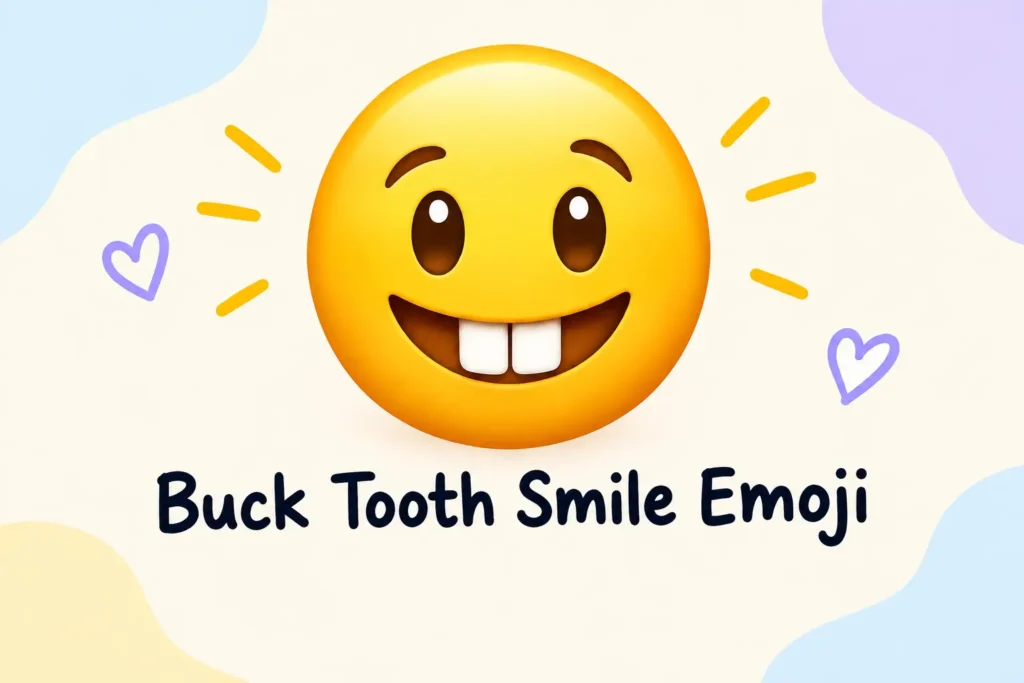
Have you ever received a smiley face with tightly clenched teeth and wondered whether the person was nervous, embarrassed, joking, or simply smiling awkwardly? The buck tooth smile emoji 😬 can be confusing because its expression looks different from a normal happy smile.
People often use this emoji in text messages, social media comments, and everyday conversations to express awkwardness, nervousness, embarrassment, tension, or an uncomfortable reaction. Sometimes, it is simply a funny way to respond when something goes wrong.
One important detail: “buck tooth smile emoji” is an informal description rather than the official Unicode name. The emoji most commonly associated with this description is 😬, officially called Grimacing Face. Its tightly pressed teeth can make it look like someone is forcing a smile or reacting to an uncomfortable situation.
Unicode
+1
But what does it mean when a friend, boyfriend, girlfriend, or coworker sends it to you? Does it indicate nervousness, sarcasm, or happiness?
The answer depends on the conversation. Understanding the message around the emoji makes it much easier to interpret its tone. Here is how the buck tooth smile emoji is commonly used, what it may mean in different relationships, and how it compares with similar smiley faces.
Buck Tooth Smile Emoji 😬 – Quick Answer
The buck tooth smile emoji 😬 usually represents an awkward smile, nervousness, embarrassment, discomfort, or a tense reaction.
It is commonly used when someone feels uncomfortable, makes a mistake, hears surprising news, or wants to acknowledge an awkward situation without saying too much.
Common meanings include:
- Awkwardness: Something feels uncomfortable or embarrassing.
- Nervousness: Someone is worried about what might happen.
- Embarrassment: A person has made a mistake or feels self-conscious.
- Tension: A situation is stressful or difficult.
- Playful discomfort: Someone is joking about an embarrassing moment.
Example:
“ I accidentally sent that message to the wrong group chat 😬 ”
Here, the emoji communicates embarrassment and nervousness about the mistake.
Its meaning is not always negative. Friends may use it humorously, and someone may add it to a message simply to make an uncomfortable situation feel less serious.
What Does the Buck Tooth Smile Emoji 😬 Mean?
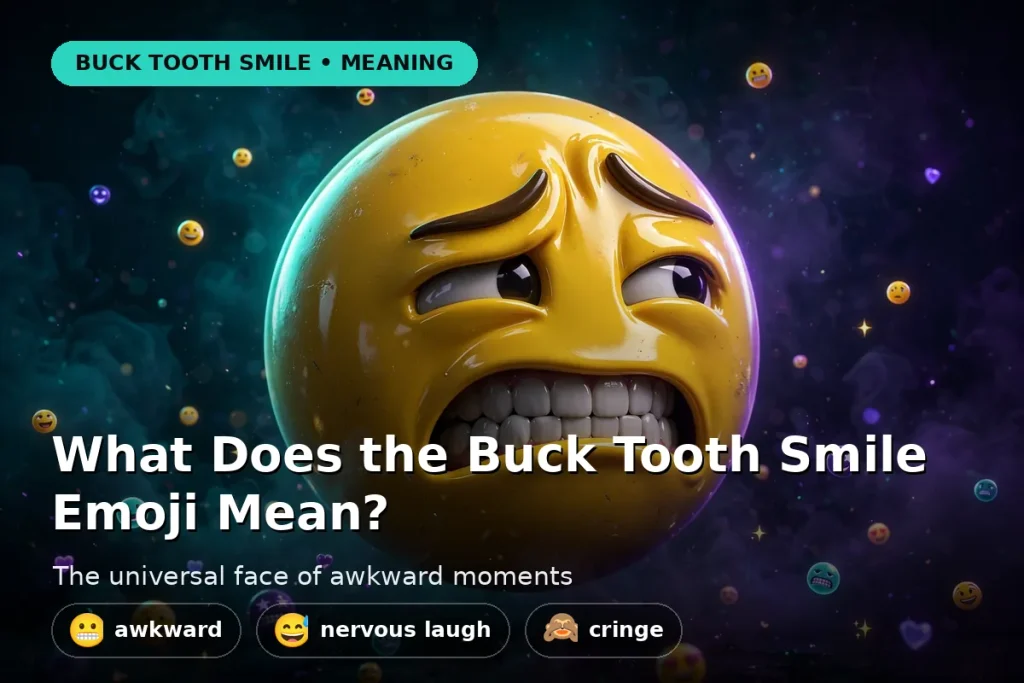
The 😬 emoji shows a face with a tense expression and visible, tightly pressed teeth. Unlike a relaxed smile, its expression can suggest that something feels uncomfortable or difficult to handle.
Although people sometimes call it the buck tooth smile emoji because of its teeth, the most common interpretation is a grimace rather than a cheerful smile.
Here are the main meanings to understand.
1. Awkwardness
This is one of the most recognizable uses of 😬. It can express the feeling you get when a conversation becomes uncomfortable or something embarrassing happens.
Example:
“My teacher called on me, and I had no idea what the answer was 😬”
The emoji shows that the person felt awkward and did not know how to respond.
2. Nervousness
Someone may use 😬 when waiting for important news, facing a difficult conversation, or worrying about the outcome of a situation.
Example:
“I have my driving test tomorrow 😬”
Here, the emoji suggests nervous anticipation rather than happiness.
3. Embarrassment
The emoji can also communicate that someone feels embarrassed about a mistake, an unexpected event, or something they said.
Example:
“I called my new boss by the wrong name 😬”
It helps convey the uncomfortable feeling without needing a long explanation.
4. Tension or discomfort
Sometimes, a person uses 😬 when they hear something unpleasant or face a situation they would rather avoid.
Example:
“My flight was delayed again, and I might miss the meeting 😬”
The emoji communicates concern about the situation.
5. Playful awkwardness
Not every use is serious. Among friends, 😬 can turn an embarrassing moment into a joke.
Example:
“I tried to dance at the party. We don’t need to discuss it 😬”
The emoji makes the message feel lighthearted and self-aware.
6. A forced or uneasy smile
The emoji can represent a smile someone gives when they do not know what else to do. Think of smiling politely after an awkward comment or pretending everything is fine when a situation feels uncomfortable.
Example:
“He told the same joke for the fifth time 😬”
Depending on the conversation, this may communicate mild discomfort, secondhand embarrassment, or a humorous reaction.
What Does the Buck Tooth Smile Emoji Mean in Texting and Chat?
In texting, the buck tooth smile emoji usually adds emotional context to a message. Written words can sound serious, blunt, or confusing without facial expressions, so 😬 helps show that the sender feels awkward, nervous, or uncomfortable.
Its meaning can change depending on where it appears in the message.
| Text message | Possible meaning |
|---|---|
| “I forgot your birthday 😬” | Embarrassment or guilt |
| “The interview starts in five minutes 😬” | Nervousness |
| “Well, that was awkward 😬” | Discomfort |
| “I ate the last slice of pizza 😬” | Playful guilt |
| “He saw my old photos 😬” | Embarrassment |
| “We need to talk tomorrow 😬” | Tension or worry |
On WhatsApp and iMessage
In WhatsApp and iMessage conversations, 😬 may soften an uncomfortable confession or show nervousness about an upcoming event.
For example:
Text: “I think I accidentally deleted the photos 😬”
The emoji indicates that the sender recognizes the problem and may feel embarrassed or worried.
However, the emoji does not automatically mean the person is apologizing. The words and the relationship between the people involved still matter.
On Messenger and in DMs
In private messages, 😬 is useful for reacting to awkward stories, uncomfortable questions, or unexpected information.
For example:
Text: “My ex just followed me again 😬”
The sender could feel nervous, amused, uncomfortable, or unsure about what to do next.
If you receive this emoji in a direct message, read the surrounding text before assuming the sender is upset with you.
What Does the Buck Tooth Smile Emoji Mean From a Girl?
When a girl sends 😬, it can communicate awkwardness, nervousness, embarrassment, or a playful reaction. The emoji alone does not establish whether she is interested in someone romantically.
Here are a few possible interpretations.
- She feels awkward: She may be responding to an uncomfortable comment or situation.
- She is nervous: She may be worried about a date, an exam, or an important conversation.
- She is embarrassed: She may have made a mistake or shared something personal.
- She is joking: She may be laughing at her own mistake or playfully admitting something.
- She is unsure how to respond: The emoji may express discomfort without making the conversation too serious.
Example:
Emily: “Are you going to talk to Jake at the party?”
Sarah: “I might 😬”
Sarah could be nervous about approaching Jake. It does not necessarily mean she has romantic feelings for him.
If a girl sends 😬 after you compliment her, the meaning depends on her response and your relationship. She might be shy, surprised, uncomfortable, or simply unsure what to say.
The best clue is the conversation as a whole, not the sender’s gender.
What Does the Buck Tooth Smile Emoji Mean From a Guy?
When a guy sends 😬, it can similarly suggest nervousness, embarrassment, discomfort, or playful awkwardness. It may be his way of acknowledging a mistake or reacting to a situation he finds difficult.
Common possibilities include:
- He feels awkward about something he said.
- He is nervous about an upcoming event.
- He is joking about an embarrassing moment.
- He is uncomfortable with a question.
- He wants to acknowledge a problem without sounding overly serious.
Example:
Ryan: “Did you tell everyone I like Olivia?”
Michael: “I might have 😬”
Michael’s emoji suggests that he knows the situation could be awkward. He may be embarrassed or playfully admitting what happened.
If a guy uses 😬 while talking about a date or romantic interest, it may indicate nervousness. However, it is not proof that he likes someone or is hiding his feelings.
Look at his actual words, how he usually texts, and whether his behavior consistently shows interest.
What Does 😬 Mean Between Friends?
Among friends, the buck tooth smile emoji is often a casual way to express embarrassment, react to a mistake, or acknowledge a situation that has become awkward.
Close friends may use it when teasing each other or admitting something slightly embarrassing.
For example:
Jake: “Did you actually wave back at someone who wasn’t waving at you?”
Chris: “Yes. In front of everyone 😬”
Chris uses the emoji to show embarrassment while keeping the conversation funny.
Friends may also use it when:
- Someone tells an awkward story.
- A friend makes a questionable decision.
- A joke does not land well.
- Someone admits a small mistake.
- A conversation becomes unexpectedly uncomfortable.
Between close friends, the emoji may communicate humor and shared understanding rather than serious distress.
Still, if a friend sends 😬 after a sensitive comment, it may indicate genuine discomfort. Avoid assuming every awkward-looking reaction is a joke.
What Does 😬 Mean in a Romantic Relationship?
In a romantic relationship, the buck tooth smile emoji can express nervousness, awkwardness, embarrassment, or tension. Its interpretation depends heavily on what the couple is discussing.
For example, a person might send it before meeting their partner’s family, after making an awkward comment, or while discussing a difficult topic.
When flirting
Alex: “So, are you finally going to ask me out?”
Mia: “Maybe this weekend 😬”
Mia may be nervous or playful about the situation. The emoji adds a sense of uncertainty, but it does not independently confirm attraction.
When apologizing
Mia: “I accidentally spoiled the ending of your show 😬”
The emoji communicates embarrassment and may soften the confession.
During a disagreement
Alex: “We should probably talk about what happened last night.”
Mia: “Yeah 😬”
Here, the emoji may indicate tension or apprehension about the conversation.
It is worth remembering that 😬 is not a heart emoji. Unlike ❤️ or 🩷, it does not primarily communicate affection or love. Its emotional tone is more often related to discomfort or nervousness, although it can appear in affectionate, playful conversations.
What Does the Buck Tooth Smile Emoji Mean in Family Conversations?
Family members may use 😬 when discussing awkward situations, admitting mistakes, or reacting to unexpected news.
For example, a teenager might send it after telling a parent that they forgot an important assignment. A parent might use it when acknowledging a minor mistake of their own.
Example:
Mom: “Did you remember to bring the cake?”
Emma: “Mom… I remembered the candles 😬”
The emoji makes the confession feel embarrassed and humorous.
It can also appear in sibling conversations about childhood memories, family jokes, or awkward social situations.
Within a family, the tone may be affectionate and playful, but the same emoji can also communicate genuine worry when the subject is serious.
What Does 😬 Mean at Work or Between Coworkers?
In workplace conversations, 😬 may communicate mild discomfort, nervousness, or acknowledgment of a mistake. It is most appropriate in informal chats where coworkers already use emojis comfortably.
Example:
David: “I just noticed the meeting was scheduled for 9 a.m., not 10.”
Jessica: “We may have a problem 😬”
The emoji conveys concern without making the message sound overly harsh.
It can also be used after a minor scheduling error, an awkward meeting, or an unexpected change.
However, in a formal email to a client, senior executive, or unfamiliar professional contact, the emoji may seem too casual. Clear wording is usually better when discussing serious mistakes, complaints, deadlines, or sensitive workplace issues.
If you are unsure about the recipient’s communication style, leave it out.
Buck Tooth Smile Emoji Meaning on Social Media
The meaning of 😬 can shift slightly depending on the type of post or conversation. On social media, it often works as a quick reaction to awkward, embarrassing, or uncomfortable moments.

People may use 😬 in comments, captions, and Stories to react to embarrassing photos, awkward situations, or relatable mistakes.
Example: “That was not my best decision 😬”

TikTok
The emoji can accompany videos about uncomfortable situations, failed attempts, embarrassing memories, or secondhand embarrassment.
Example: “Watching this with the sound on in public 😬”

Snapchat
In casual snaps and private chats, 😬 may express nervousness, an awkward confession, or an uncomfortable reaction.
Example: “I think your brother saw our messages 😬”

People may use 😬 to respond to awkward news, family stories, embarrassing memories, or uncomfortable discussions.
Example: “I forgot to RSVP to the wedding 😬”
These are illustrative examples of how the emoji can be used, not fixed meanings assigned to each platform.
Real Conversation Examples Using the Buck Tooth Smile Emoji
The easiest way to understand 😬 is to see how it works in natural American English conversations.
1. Between friends
Jake: “Did you seriously trip walking into the restaurant?”
Emily: “Right in front of my date 😬”
Meaning: Emily feels embarrassed but is sharing the experience casually. The emoji makes the situation sound awkward and a little funny.
2. In a romantic conversation
Ryan: “Are you nervous about meeting my parents?”
Olivia: “A little, not gonna lie 😬”
Meaning: Olivia is expressing nervousness about an important social situation. The emoji does not indicate a lack of interest.
3. Between family members
Mom: “Did you clean the kitchen like I asked?”
Tyler: “I was going to do it after lunch 😬”
Meaning: Tyler may feel guilty or awkward because he has not completed the task.
4. When offering support
Megan: “I have to give a presentation in front of the whole company tomorrow.”
Ashley: “You’ve got this! 😬”
Meaning: Ashley is encouraging her friend, although the emoji also adds a nervous or apprehensive tone. A warmer emoji such as 😊 or 💛 might communicate reassurance more clearly.
5. After receiving a compliment
Daniel: “You looked amazing at the party last night.”
Lauren: “Stop, you’re making me blush 😬”
Meaning: Lauren may feel shy or awkward about the compliment. Her response could be playful, but the emoji alone does not confirm romantic interest.
6. In a social media comment
Kevin: “I watched my old audition video for the first time in years.”
Rachel: “Oh no, I need to see this 😬”
Meaning: Rachel is playfully anticipating something embarrassing or funny.
7. During casual texting
Brandon: “I just realized I had my microphone on during the entire meeting.”
Sophie: “Please tell me nobody noticed 😬”
Meaning: Sophie is reacting with concern and secondhand embarrassment.
8. After an awkward misunderstanding
Noah: “I thought you were waving at me, so I waved back.”
Grace: “I was waving at my sister behind you 😬”
Meaning: Grace acknowledges an awkward misunderstanding in a lighthearted way.
9. Before an important event
Ethan: “The results come out in ten minutes.”
Chloe: “I’m not ready for this 😬”
Meaning: Chloe is expressing anxiety or nervous anticipation.
10. After making a mistake
Liam: “Did you send the group the right file?”
Madison: “I sent the draft with all my comments in it 😬”
Meaning: Madison is embarrassed and may be worried about the consequences.
The key lesson from these examples is that 😬 communicates an emotional reaction. The surrounding words explain what caused that reaction.
Buck Tooth Smile Emoji 😬 vs. Similar Emojis
The buck tooth smile emoji can be confused with other smiling faces because several emojis show visible teeth. However, their expressions and typical uses are different.
😬
😬 Grimacing Face
Awkwardness, tension, nervousness
Best when something feels uncomfortable, embarrassing, or difficult.
😁
😁 Beaming Face with Smiling Eyes
Happiness, excitement, enthusiasm
Best for a broad, cheerful grin or a happy reaction.
😀
😀 Grinning Face
Friendliness, happiness, positivity
A more straightforward expression of cheerfulness than 😬.
😅
😅 Grinning Face with Sweat
Relief, nervous laughter, embarrassment
Useful when a situation was stressful but has worked out, or when someone feels awkward and relieved.
😊
😊 Smiling Face with Smiling Eyes
Warmth, friendliness, contentment
A softer smile that is usually more comfortable and positive.
😂
😂 Face with Tears of Joy
Laughter, amusement, hilarity
Better when something is genuinely funny or makes someone laugh hard.
Quick comparison table
| Emoji | Official name | Typical tone |
|---|---|---|
| 😬 | Grimacing Face | Awkward or tense |
| 😁 | Beaming Face with Smiling Eyes | Cheerful and excited |
| 😀 | Grinning Face | Happy and friendly |
| 😅 | Grinning Face with Sweat | Nervous or relieved |
| 😊 | Smiling Face with Smiling Eyes | Warm and gentle |
| 😐 | Neutral Face | Unimpressed or neutral |
| 😳 | Flushed Face | Embarrassed or surprised |
The most important distinction is between 😬 and 😁. Both show teeth, but 😬 commonly communicates discomfort or tension, while 😁 is generally a more openly cheerful grin.
These interpretations are conventions rather than strict rules. Individual habits and the way an emoji is rendered can influence how a message feels.
Is the Buck Tooth Smile Emoji an Official Emoji?
Yes, the character most commonly meant by “buck tooth smile emoji” is an official emoji, but its official name is Grimacing Face (😬), not Buck Tooth Smile.
According to Unicode’s emoji reference, its character code is U+1F62C. The official emoji listing includes terms associated with grimacing and awkward expressions.
Unicode
+1
Here is the basic technical information:
| Detail | Information |
|---|---|
| Common informal description | Buck tooth smile emoji |
| Official Unicode name | Grimacing Face |
| Character | 😬 |
| Unicode code point | U+1F62C |
| Category | Smileys & Emotion |
| Common interpretations | Grimacing, awkwardness, tension, nervousness |
The emoji was included in Unicode 6.1, released in 2012. Its appearance may vary between Apple, Google, Microsoft, and other platforms.
Some designs make the teeth appear more prominent, which helps explain why people informally call it a buck tooth smile. However, the emoji is not specifically defined as a face with protruding front teeth.
Important distinction: The tooth emoji 🦷 is a separate character. It represents a tooth and is commonly used in dental or oral-health contexts. It does not convey the same facial expression as 😬.
Common Mistakes When Interpreting 😬
Even though the buck tooth smile emoji has recognizable uses, it is easy to misunderstand it when you focus on the symbol rather than the conversation.
1. Assuming it always means happiness
The visible teeth may look like a smile, but 😬 often suggests discomfort, nervousness, or an awkward reaction. It is not interchangeable with every happy-face emoji.
2. Assuming it always means embarrassment
Embarrassment is one possible interpretation, but the emoji can also convey tension, apprehension, or playful awkwardness. A person might send it before an exam without having done anything embarrassing.
3. Assuming a sender is angry
A grimace can look uncomfortable, but it does not automatically mean the sender is angry with you. They may be reacting to the situation rather than to anything you said.
4. Reading romantic interest into it
If a girl or guy sends 😬 during a flirtatious conversation, the emoji may reflect nervousness or shyness. However, it is not reliable evidence of attraction on its own.
5. Ignoring the words around the emoji
Compare these messages:
- “I forgot the tickets 😬” — likely embarrassment or worry.
- “I finally told him how I feel 😬” — possibly nervous anticipation.
- “That meeting was uncomfortable 😬” — likely awkwardness.
The same emoji communicates different nuances in each case.
6. Assuming every platform displays it identically
The general identity of the emoji remains the same, but its visual appearance can differ between devices and apps. A slightly different-looking grin may influence how a recipient perceives the tone.
When Should You Use the Buck Tooth Smile Emoji?
The 😬 emoji works best when you want to acknowledge discomfort or awkwardness without making your message sound overly serious.
Use it naturally in situations such as:
- Admitting a mistake: “I forgot to attach the document 😬”
- Expressing nervousness: “My interview starts in five minutes 😬”
- Sharing an embarrassing story: “I called my teacher Mom today 😬”
- Reacting to awkward news: “He found out about the surprise party 😬”
- Joking with friends: “I tried cooking without reading the recipe 😬”
- Acknowledging tension: “This conversation is getting awkward 😬”
It can also work when you want to make a confession sound a little lighter.
For example, “I ate the last cookie 😬” feels more playful than the same sentence without an emoji.
However, the words still matter. If your message concerns a serious problem, adding a grimacing face does not replace a sincere apology or a clear explanation.
When Should You Avoid Using 😬?
There is no universal rule against using this emoji, but some situations call for more care.
Formal professional communication: In an official email, proposal, or client message, 😬 may seem too informal. Clear wording is generally safer.
Serious apologies: If you have genuinely hurt someone, the emoji may make your apology seem dismissive. A direct, sincere apology is usually more appropriate.
Sensitive personal conversations: When someone shares grief, fear, or another difficult experience, 😬 may unintentionally suggest discomfort with their feelings.
Romantic messages that need clarity: If you want to express affection, a clear message or a warmer emoji may communicate your intention better.
Messages where the tone is already unclear: If the recipient could interpret the emoji as sarcasm, explain what you mean instead of relying on the symbol alone.
The goal is not to avoid 😬 altogether. It is to choose an expression that matches the emotion you actually want to communicate.
Frequently Asked Questions About the Buck Tooth Smile Emoji
1. What does the buck tooth smile emoji 😬 mean?
The buck tooth smile emoji most commonly refers to 😬, the Grimacing Face emoji. It can express awkwardness, nervousness, embarrassment, discomfort, or tension, depending on the conversation.
2. Does 😬 mean someone is happy?
Not necessarily. Although the emoji shows visible teeth, it generally communicates a tense or uncomfortable expression rather than straightforward happiness. For a more cheerful grin, 😀 or 😁 may be a better fit.
3. What does 😬 mean in texting?
In texting, 😬 often signals an awkward moment, a nervous reaction, embarrassment, or concern about a situation. It can also make a minor mistake sound more playful.
4. What does 😬 mean from a girl?
A girl may use 😬 to express nervousness, embarrassment, discomfort, or playful awkwardness. If the conversation is romantic, it could reflect shyness, but it does not prove that she likes someone.
5. What does 😬 mean from a guy?
A guy may use it when he feels awkward, admits a mistake, worries about an outcome, or jokes about an uncomfortable situation. His usual texting style and the conversation provide better clues than the emoji alone.
6. Is the buck tooth smile emoji sarcastic?
It can be used sarcastically, especially when someone reacts to an awkward comment or an obvious mistake. However, sarcasm is only one possible interpretation; the emoji may also express genuine nervousness or embarrassment.
7. What is the difference between 😬 and 😁?
😬 is called Grimacing Face and commonly conveys awkwardness or tension. 😁 is called Beaming Face with Smiling Eyes and generally communicates happiness, excitement, or a broad cheerful grin.
8. Is 😬 a romantic emoji?
It is not primarily a romantic emoji. Couples may use it when discussing awkward dates, difficult conversations, or nervous moments, but it does not directly express love. Heart emojis such as ❤️ and 🩷 are more closely associated with affection.
9. What does 😬 mean on Instagram?
On Instagram, 😬 can appear in comments, captions, Stories, and direct messages to convey an awkward reaction, embarrassment, or nervousness. The surrounding post or message helps clarify its intended meaning.
10. Does 😬 mean someone is uncomfortable with me?
Possibly, but not necessarily. The person could be uncomfortable with the situation, embarrassed by something they said, or simply joking. Look at the conversation and their behavior before drawing conclusions.
11. Is 😬 the same as the tooth emoji 🦷?
No. 😬 is the Grimacing Face emoji, which expresses a facial reaction. 🦷 is the Tooth emoji, which represents a tooth and is often used when discussing dentists, dental care, or teeth.
12. What should I reply when someone sends 😬?
Choose a response based on the context. If they seem nervous, you could say, “Don’t worry, it’ll be fine!” If they admit a funny mistake, you might respond, “Oh no 😂.” If they seem genuinely uncomfortable, ask, “Is everything okay?”
Conclusion
The buck tooth smile emoji 😬 is most commonly associated with awkwardness, nervousness, embarrassment, and uncomfortable situations. Although its visible teeth may resemble a conventional smile, its expression usually carries a more tense or uncertain feeling.
In texting, the emoji can help communicate emotions that are difficult to express through words alone. Friends might use it to laugh at an embarrassing mistake, couples might send it when discussing a nervous moment, and coworkers might use it to acknowledge a minor problem in an informal conversation.
Its meaning can also vary depending on the sender, the relationship, the wording of the message, and the platform displaying it. It does not automatically indicate anger, romantic interest, or happiness.
Remember that “buck tooth smile” is an informal description of the character most commonly identified as 😬, whose official Unicode name is Grimacing Face.
The simplest way to interpret this emoji is to consider what happened immediately before it appeared. When you understand the context, you can usually tell whether the sender is nervous, embarrassed, joking, or reacting to an awkward situation.

Alex Carter is a writer and content contributor at ReadEmoji.com. He focuses on explaining emoji meanings, common usage, and digital communication in a simple and easy-to-understand way. His goal is to help readers quickly understand what popular emojis mean and how they are commonly used in everyday conversations.