The Easter Bunny emoji 🐰 is a cute way to express Easter celebrations, springtime, happiness, and playful affection. You might see it in an Easter greeting, a family group chat, an Instagram caption, or a message from someone who loves rabbits. But its meaning can change depending on who sends it and what the conversation is about.
Unlike a heart emoji, which often communicates love or affection, the Easter Bunny emoji is more closely associated with rabbits, Easter traditions, fresh beginnings, and cheerful seasonal moments. It can also make an ordinary message feel sweeter, friendlier, or more playful.
One small detail matters: the 🐰 emoji is officially called Rabbit Face, while the 🐇 emoji is called Rabbit. People often use the rabbit-face emoji as an Easter Bunny symbol, even though its official name does not specifically mention Easter.
So, what does 🐰 mean in texting? Does it have a romantic meaning when a girl or guy sends it? And how is it different from other bunny emojis? Let’s explore its meanings, common uses, and real-life examples so you can understand the message behind it.
Easter Bunny Emoji 🐰 – Quick Answer
The Easter Bunny emoji 🐰 commonly represents Easter, cute rabbits, springtime, happiness, and playful affection. It is often used in Easter greetings, holiday decorations, social media captions, and friendly messages.
Its meaning depends on the context:
- Easter celebrations: Happy Easter greetings, Easter baskets, eggs, and family traditions.
- Cuteness: Adorable animals, sweet moments, and playful personalities.
- Springtime: Flowers, new beginnings, sunshine, and seasonal happiness.
- Affection: A warm, sweet, or caring tone in a personal message.
- Playfulness: Jokes, teasing, and lighthearted conversations.
Example: “Happy Easter! Hope your day is full of chocolate and happiness 🐰🌷”
Here, the emoji clearly represents Easter and the cheerful feeling associated with the holiday.
What Does the Easter Bunny Emoji 🐰 Mean?
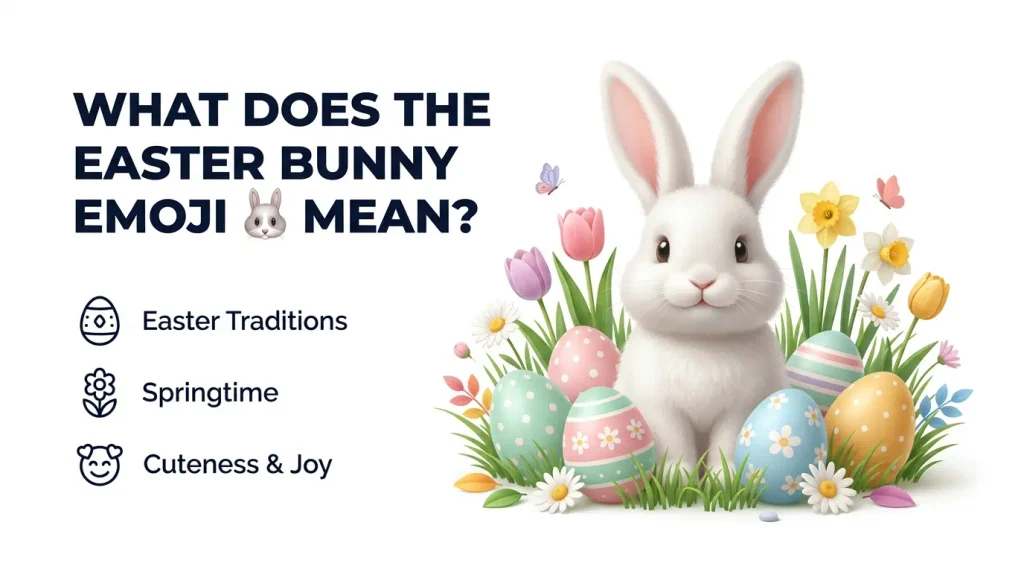
The Easter Bunny emoji has several related meanings, and the message around it usually tells you which one applies. Its friendly rabbit face gives it a softer, more affectionate tone than a plain animal symbol.
1. Easter and Holiday Celebrations
The most recognizable seasonal meaning is Easter. People use 🐰 when wishing others a happy Easter, sharing holiday plans, or posting pictures of Easter eggs, candy, and family activities.
For example:
- “Happy Easter, everyone! 🐰🥚”
- “The Easter Bunny came early this year! 🐰🍫”
- “Getting ready for our family Easter brunch 🌷🐰”
In these examples, the emoji helps communicate the holiday theme. It does not need a hidden or romantic meaning.
2. Cuteness and Sweetness
A rabbit’s face can make a message feel adorable, gentle, or playful. Someone might use 🐰 when talking about a pet rabbit, a cute outfit, a plush toy, or something that makes them smile.
For example:
“Look at this little bunny! I can’t handle how cute it is 🐰🥹”
The emoji adds warmth and excitement to the message.
3. Springtime and New Beginnings
Rabbits are frequently associated with spring, making 🐰 a natural choice for seasonal posts. It can appear alongside flowers, sunshine, baby animals, and other spring-themed decorations.
For example:
“Fresh flowers, warmer weather, and a little spring happiness 🌷🐰☀️”
This use is especially common in seasonal greetings and aesthetic social media posts.
4. Affection and a Playful Personality
The Easter Bunny emoji can make a personal message sound softer or more affectionate. Someone might use it to appear sweet, playful, shy, or a little silly.
For example:
“Okay, you got me smiling again 🐰”
Depending on the relationship, this could be friendly teasing, a cute response, or mild flirting. The emoji alone cannot establish which interpretation is correct.
5. Rabbits, Pets, and Animal Lovers
Sometimes 🐰 means exactly what it shows: a rabbit. Pet owners may use it when sharing pictures, discussing animal care, or celebrating a new pet.
For example:
“Meet our new family member, Daisy! 🐰💕”
Here, the rabbit face refers to the actual animal, while the heart adds affection.
What Does the Easter Bunny Emoji Mean in Texting and Chat?
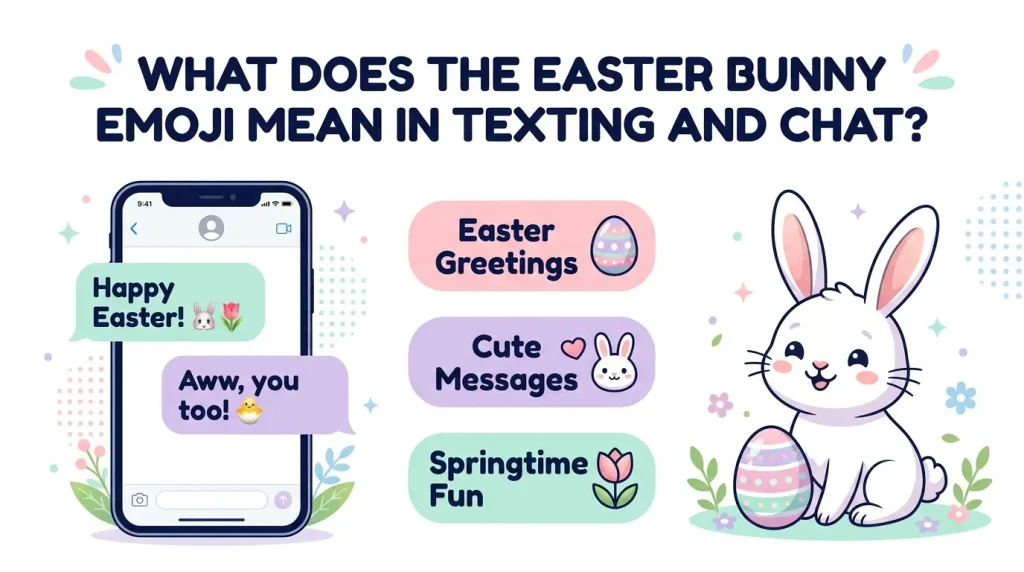
In texting, the 🐰 emoji usually adds a cute, cheerful, or affectionate tone. Its meaning can range from a simple Easter greeting to a playful reaction in an ongoing conversation.
It is used in SMS messages, WhatsApp, iMessage, Facebook Messenger, and private messages on social platforms.
Here are some common interpretations.
| Texting situation | Example message | Likely meaning |
|---|---|---|
| Holiday greeting | “Happy Easter! 🐰” | Celebrating Easter |
| Cute reaction | “Awww, that’s adorable 🐰” | Warmth and sweetness |
| Friendly conversation | “See you tomorrow! 🐰” | A playful, friendly tone |
| Flirting | “You always make me blush 🐰💕” | Possible affection or flirting |
| Pet conversation | “Look at my bunny! 🐰” | Talking about a rabbit |
| Spring plans | “Picnic season is here 🌷🐰” | Springtime happiness |
What Does 🐰 Mean at the End of a Text?
When someone adds 🐰 at the end of an otherwise ordinary message, it may simply soften the tone.
Compare these messages:
- “Good night.”
- “Good night 🐰”
- “Good night, cutie 🐰💕”
The first is neutral. The second sounds potentially sweeter or more playful. The third has a more clearly affectionate tone because of the wording and additional heart emoji.
Still, individual habits matter. Someone who regularly uses animal emojis may not intend anything special by adding a bunny face.
What Does 🐰 Mean as a Reply?
If someone responds to your message with only 🐰, look at what you said immediately beforehand.
- After an Easter greeting, it probably acknowledges the holiday.
- After you share a cute photo, it may express that they find it adorable.
- During playful teasing, it may be a lighthearted reaction.
- After a romantic compliment, it could reinforce a sweet or flirtatious mood.
A single emoji provides less information than a complete sentence, so avoid reading too much into it without other clues.
What Does the Easter Bunny Emoji Mean From a Girl?
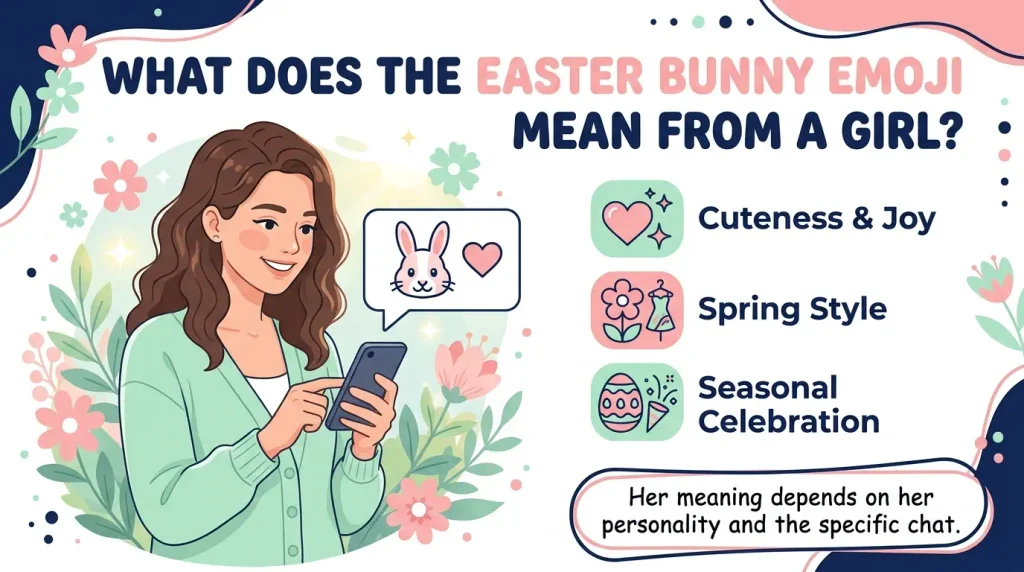
When a girl sends 🐰, she may be expressing cuteness, friendliness, playfulness, or affection. The exact meaning depends on the conversation and her usual communication style.
Here are some possible interpretations.
She is being friendly. If she sends the emoji after saying goodbye or wishing you a happy holiday, it may simply make the message warmer.
She finds something cute. If you share a picture of a pet, a gift, or a funny moment, 🐰 can be a cute reaction.
She is flirting. If the emoji appears alongside personal compliments, affectionate language, or mutual teasing, it may contribute to a flirtatious tone.
She likes the bunny aesthetic. Some people use rabbit emojis because they enjoy cute animals, pastel colors, or playful online personalities. It may have no deeper meaning.
Consider this example:
Emily: “I had such a good time with you today.”
Jake: “Me too. We should do it again soon.”
Emily: “Definitely 🐰💕”
Meaning: Emily’s response sounds warm and affectionate. Depending on their existing relationship, it could suggest romantic interest, but the emoji by itself does not prove that she likes Jake romantically.
The most useful clue is the overall pattern of communication, not one symbol.
What Does the Easter Bunny Emoji Mean From a Guy?
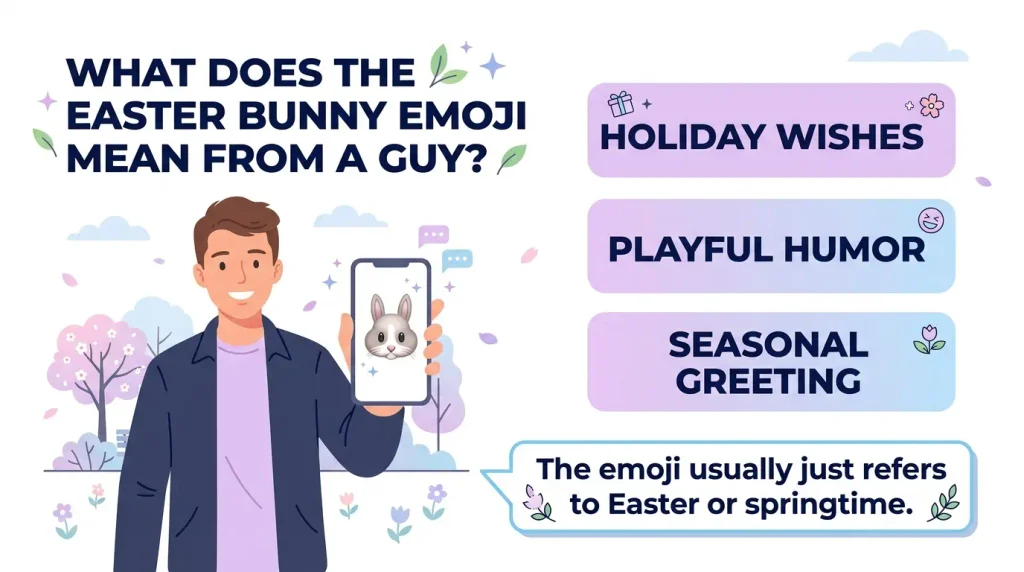
When a guy sends 🐰, he may be trying to sound playful, sweet, friendly, or affectionate. Men can use the emoji for the same general reasons as anyone else.
For example, a guy might use it to:
- Wish someone a happy Easter.
- React to a cute animal or photo.
- Make a message feel less serious.
- Show affection toward a girlfriend or partner.
- Participate in a playful conversation.
- Match the emoji style of the person he is talking to.
Consider this conversation:
Megan: “You remembered my favorite chocolate! 🥹”
Ryan: “Of course I did 🐰💕”
Meaning: Ryan’s response sounds caring and affectionate. If they are dating, it may reinforce their romantic connection. If they are friends, it could simply be a sweet gesture.
A guy using 🐰 does not automatically mean he is flirting. His words, relationship with the recipient, and usual texting habits provide better clues.
What Does the Easter Bunny Emoji Mean Between Friends?
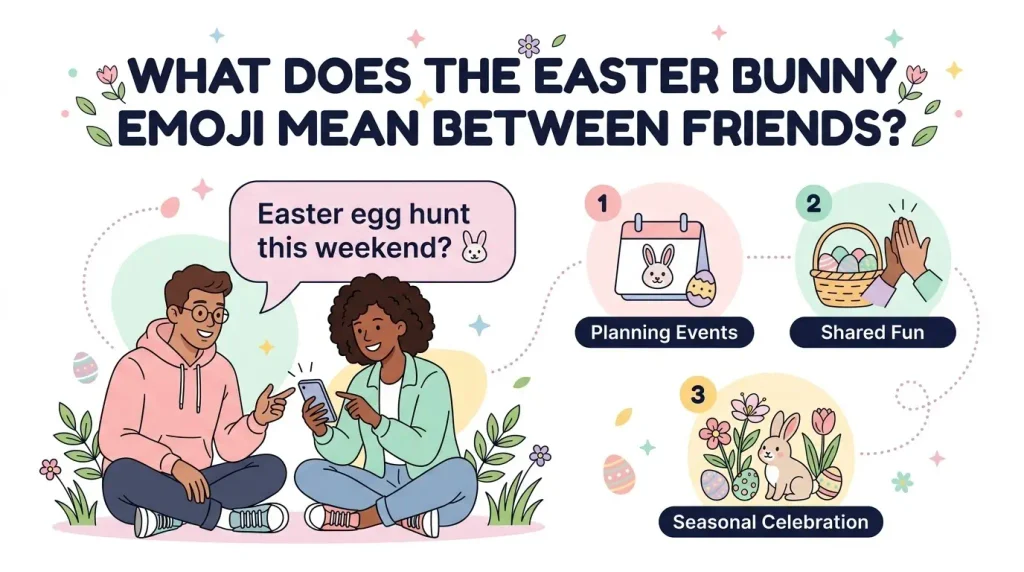
Between friends, 🐰 usually communicates friendliness, cuteness, and lighthearted affection. It can be used without any romantic implications.
Friends may send it when:
- Sharing funny animal videos.
- Wishing each other a happy Easter.
- Reacting to a cute outfit or hairstyle.
- Planning a seasonal activity.
- Giving each other playful nicknames.
- Sending a warm good-morning or good-night message.
Example conversation
Ashley: “I found the cutest bunny mug at the store!”
Lauren: “You have to get it! 🐰”
Meaning: Lauren is responding enthusiastically to something cute. The emoji supports a friendly, playful mood rather than a romantic one.
Best friends may also use 🐰 as part of an inside joke or a personal nickname. That meaning may be unique to their friendship.
What Does the Easter Bunny Emoji Mean in a Romantic Relationship?
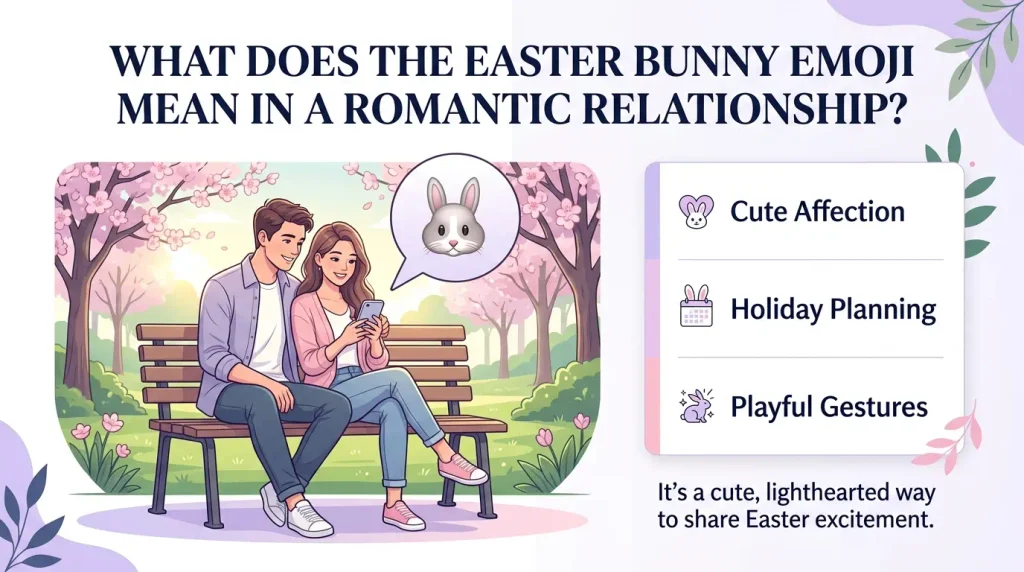
In a romantic relationship, 🐰 can add sweetness, tenderness, and playfulness to everyday communication. Couples might use it when sending affectionate messages, sharing Easter plans, or joking around with each other.
For example:
- “Morning, sleepyhead 🐰💕”
- “Can’t wait to see you tonight 🐰❤️”
- “I got you a little Easter surprise! 🐰🎁”
- “You’re being ridiculously cute today 🐰”
The emoji can make an affectionate message feel softer, but it is not inherently a symbol of romantic love.
If a partner sends 🐰 with ❤️ or 💕, the hearts contribute a more direct expression of affection. If the same partner sends 🐰 while sharing a picture of a rabbit, it may simply refer to the animal.
The key distinction: In romantic conversations, the bunny face can support a loving tone, but the surrounding words usually communicate the relationship meaning more clearly.
What Does the Easter Bunny Emoji Mean Between Family Members?
Within families, 🐰 often represents Easter traditions, children, family activities, and cheerful affection.
Parents may use it when talking to children about the Easter Bunny, planning egg hunts, or preparing holiday gifts. Siblings may send it to each other when discussing Easter plans or sharing cute animal pictures.
Examples include:
- “The Easter baskets are ready! 🐰🥚”
- “Can’t wait to see everyone on Sunday 🐰🌷”
- “Your little bunny costume is adorable! 🐰”
- “We hid the eggs in the backyard. Let the hunt begin! 🐰🥚”
In these messages, the emoji communicates a seasonal or family-friendly feeling.
Grandparents, parents, children, and siblings can all use it naturally. There is no reason to interpret a family member’s bunny emoji as romantic.
What Does the Easter Bunny Emoji Mean at Work?
The 🐰 emoji can be appropriate in a relaxed workplace, particularly when coworkers are discussing Easter, spring events, or a pet rabbit.
For example:
Rachel: “We’re bringing Easter treats to the office on Friday.”
Michael: “Sounds fun! I’ll bring some chocolate eggs 🐰🥚”
Meaning: Michael is joining a casual holiday conversation. The emoji helps communicate a cheerful tone.
However, in a formal email, business proposal, or serious professional discussion, the emoji may feel unnecessarily informal.
Use it when the communication style allows casual emojis. If you are unsure, a simple written greeting is usually a safer choice.
How Is the Easter Bunny Emoji Used on Social Media?
The 🐰 emoji is useful on social media because it can communicate a seasonal theme or a cute mood without needing a long caption. Its meaning often depends on the photo, video, or text that accompanies it.
On Instagram, 🐰 works well in Easter posts, spring outfits, pet photos, and pastel-themed content.
Examples:
- “Easter Sunday with my favorite people 🐰🌷”
- “A little spring magic ✨🐰”
- “Chocolate eggs and family memories 🥚🐰”
It can also appear in a bio or username as a decorative symbol. In that setting, it may reflect someone’s personal style rather than a specific message.
TikTok
On TikTok, the bunny emoji can accompany Easter videos, rabbit clips, cute edits, seasonal transitions, and playful content.
For example, a creator might caption a video of a rabbit hopping around with “POV: your new favorite little friend 🐰.”
The emoji supports the video’s theme. It does not have one universal TikTok-specific meaning.
Snapchat
On Snapchat, 🐰 may appear in a casual message, a picture caption, or a reply to a friend’s story.
If someone sends a bunny face after sharing an Easter outfit or a cute animal picture, it probably relates to that content. If it appears during a playful conversation, it may simply make the exchange feel more fun.
Do not confuse the emoji itself with Snapchat’s separate friend-status symbols, which have their own meanings.
Facebook users may add 🐰 to Easter greetings, family photos, event announcements, and holiday posts.
For example:
“Wishing all our friends and family a beautiful Easter filled with happiness 🐰🥚🌷”
It is especially suitable for posts intended to feel warm, cheerful, and family-friendly.
WhatsApp and iMessage
In private chats, the bunny face is often a quick way to add personality to an ordinary message. People may use it in family group chats, conversations with friends, or affectionate messages to a partner.
The surrounding text matters more than the platform. A bunny emoji in a family Easter group chat has a different likely meaning from the same symbol sent after a romantic compliment.
Real Conversation Examples: What Does 🐰 Mean in Different Situations?
These examples use familiar American English names and everyday conversations to show how the same emoji can communicate different things.
1. Between Friends
Mia: “I found a rabbit-shaped chocolate bar at the store.”
Chloe: “You have to get it 😂🐰”
Meaning: Chloe is responding playfully to something related to rabbits and Easter treats. There is no clear romantic implication.
2. In a Romantic Conversation
Olivia: “I had such a nice time with you last night.”
Ethan: “Me too. Already looking forward to next time 🐰💕”
Meaning: The wording expresses enthusiasm about seeing each other again. The bunny and hearts add a sweet, affectionate tone that may fit a romantic relationship.
3. In a Family Chat
Mom: “The Easter eggs are hidden in the backyard!”
Sophie: “I’m ready! 🐰🥚”
Meaning: Sophie is excited about a family Easter activity.
4. To Offer Support
Ava: “I’ve had a rough day, honestly.”
Lily: “I’m here if you need me 🐰💗”
Meaning: Lily is offering emotional support. The bunny makes the message feel gentle, while the heart reinforces care.
5. To Show Appreciation
Noah: “I brought you your favorite cookies.”
Grace: “You’re the sweetest! 🐰💕”
Meaning: Grace is expressing appreciation in a warm, playful way. Depending on their relationship, this could be friendly or romantic.
6. In a Social Media Comment
Emma: “Our first Easter with little Max 🐣🌷”
Rachel: “This is the cutest picture ever 🐰”
Meaning: Rachel is complimenting the family photo and reinforcing its cute, seasonal theme.
7. In Casual Texting
Daniel: “See you tomorrow morning!”
Madison: “Sounds good 🐰”
Meaning: Madison is confirming the plan with a friendly tone. The emoji may simply be part of her normal texting style.
These conversations illustrate an important point: the bunny emoji can contribute to a message’s tone, but it cannot tell you everything about the sender’s intentions.
Easter Bunny Emoji 🐰 vs. Rabbit Emoji 🐇
The 🐰 and 🐇 emojis are related, but they depict rabbits differently.
🐰
🐰 Rabbit Face
A front-facing rabbit’s head. Often used for cuteness, affection, pets, and the Easter Bunny.
🐇
🐇 Rabbit
A full-body rabbit. Often used for rabbits as animals, springtime, Easter, and rabbit-related themes.
The distinction is useful when choosing an emoji for a message.
- Use 🐰 for a cute greeting, a playful reaction, or an Easter Bunny theme.
- Use 🐇 when talking about rabbits more generally or emphasizing the animal itself.
Both can represent Easter. Neither is limited to that holiday.
Easter Bunny Emoji 🐰 vs. Other Easter Emojis
Easter-themed messages often combine several emojis to communicate a fuller idea.
| Emoji | Name | Common meaning | Typical tone |
|---|---|---|---|
| 🐰 | Rabbit Face | Easter Bunny, cuteness, affection | Playful and sweet |
| 🐇 | Rabbit | Rabbits, spring, Easter | Natural and cheerful |
| 🥚 | Egg | Eggs and Easter egg hunts | Seasonal |
| 🐣 | Hatching Chick | New life, baby animals, spring | Cute and hopeful |
| 🐤 | Baby Chick | Chicks, springtime, baby animals | Cheerful |
| 🌷 | Tulip | Spring flowers and beauty | Fresh and gentle |
| 🌸 | Cherry Blossom | Spring, flowers, beauty | Soft and aesthetic |
| 🍫 | Chocolate Bar | Chocolate treats and gifts | Indulgent and fun |
| 🎁 | Wrapped Gift | Presents and surprises | Celebratory |
| ✨ | Sparkles | Excitement, magic, special moments | Bright and playful |
For example, “Happy Easter! 🐰🥚🌷” combines the Easter Bunny, eggs, and spring flowers to create a clear holiday greeting.
By contrast, “You’re so cute 🐰💕” uses the bunny face and hearts to emphasize affection rather than Easter.
Easter Bunny Emoji 🐰 vs. Heart Emojis
The bunny face can express affection, but it is not a direct substitute for every heart emoji. Hearts generally make the emotional message clearer, while 🐰 often adds a cute or playful quality.
| Emoji | Name | Common meaning | Typical tone |
|---|---|---|---|
| 🐰 | Rabbit Face | Cuteness, Easter, playfulness | Sweet and playful |
| ❤️ | Red Heart | Love and strong affection | Direct and heartfelt |
| 🩷 | Pink Heart | Tenderness, affection, sweetness | Soft and caring |
| 💕 | Two Hearts | Affection, closeness, love | Warm and romantic or friendly |
| 💖 | Sparkling Heart | Excitement, admiration, affection | Enthusiastic |
| 🤍 | White Heart | Care, tenderness, or a clean aesthetic | Gentle and understated |
Consider the difference:
- “Happy Easter 🐰” focuses on the holiday.
- “Happy Easter ❤️” adds a more direct expression of love or warmth.
- “Happy Easter 🐰💕” combines the holiday theme with a sweet, affectionate tone.
These are common interpretations, not fixed rules. A person’s habits and the surrounding message can change the tone.
Official Easter Bunny Emoji Information
Although many people search for the Easter Bunny emoji, the character 🐰 has a different official name.
According to Unicode Consortium, the emoji is identified by the Unicode character name Rabbit Face. It is a standard emoji representing a rabbit’s head, and people commonly use it to represent the Easter Bunny.
Unicode
+1
🐰
Rabbit Face
Commonly used as the Easter Bunny emoji
Official name
Rabbit Face
Unicode code point
U+1F430
Unicode version
Unicode 6.0 (2010)
Emoji version
Emoji 1.0 (2015)
Technical details verified against Emojipedia’s Rabbit Face reference and the Unicode Emoji List.
Meaning, Copy And Paste
+1
The emoji typically appears as a gray or white rabbit face with upright ears and a pink nose, although its appearance varies across devices and platforms.
Unicode also includes 🐇, officially named Rabbit. This is a separate character depicting the animal’s full body. Both emojis have been available since Unicode 6.0.
Meaning, Copy And Paste
+1
One important distinction: Rabbit Face is the official emoji name; Easter Bunny is a common use of the emoji. These terms are related, but they are not interchangeable as technical names.
Common Mistakes When Interpreting the Easter Bunny Emoji
Even a simple emoji can be misunderstood when someone assumes it has only one meaning.
1. Assuming It Always Means Easter
Although 🐰 is widely associated with the Easter Bunny, it is also used throughout the year for pets, cute reactions, and playful messages.
2. Assuming It Always Means Romantic Interest
A bunny face can make a message feel affectionate, but it does not prove that someone has romantic feelings. Friends and family members use it too.
3. Confusing 🐰 With 🐇
The two emojis depict rabbits differently. 🐰 shows the face, while 🐇 shows the full animal. Both can communicate Easter-related meanings.
4. Ignoring the Surrounding Message
“Happy Easter 🐰” and “You’re adorable 🐰💕” communicate different things. The text, relationship, and situation help explain the intended meaning.
5. Assuming Everyone Uses It the Same Way
Some people use animal emojis frequently, while others reserve them for special occasions. Personal habits influence how an emoji should be interpreted.
6. Treating the Emoji as a Secret Code
Unless the people involved have established a private meaning, there is no reason to assume 🐰 represents a hidden message, romantic promise, or particular intention.
When Should You Use the Easter Bunny Emoji?
The Easter Bunny emoji is a natural choice whenever you want a message to feel cheerful, cute, or connected to rabbits and springtime.
Consider using it in these situations:
- Easter greetings: “Happy Easter to you and your family! 🐰🌷”
- Holiday invitations: “We’re having an Easter egg hunt this Sunday 🐰🥚”
- Pet photos: “Someone is ready for their close-up! 🐰”
- Spring captions: “Spring has officially arrived 🌷🐰”
- Friendly messages: “Hope your day is going well 🐰”
- Affectionate texts: “You’re too cute sometimes 🐰💕”
- Gifts and surprises: “Your Easter basket is waiting! 🐰🎁”
- Cute social media content: “A little bunny happiness for your feed 🐰✨”
You can also combine 🐰 with other emojis to make the intended meaning clearer. For example, 🐰🥚 suggests Easter activities, while 🐰💕 adds affection.
When Should You Avoid Using the Easter Bunny Emoji?
There is no universal rule against using 🐰, but some situations call for a more neutral communication style.
Formal professional messages: In a serious business email, legal document, or official announcement, the emoji may feel too casual.
Sensitive conversations: If someone is discussing grief, a serious problem, or a difficult personal experience, an upbeat bunny face may not match the emotional tone. A thoughtful written response is often more appropriate.
Unclear romantic situations: If you are worried that the recipient might interpret a cute emoji as flirting, consider using words that express your intentions more clearly.
Messages where precision matters: In instructions, technical discussions, or important announcements, the emoji may add little value and could distract from the information.
The goal is not to avoid the emoji altogether. It is to make sure its playful tone suits the situation.
Frequently Asked Questions About the Easter Bunny Emoji 🐰
1. What does the Easter Bunny emoji 🐰 mean?
The Easter Bunny emoji commonly represents Easter, rabbits, springtime, cuteness, and playful affection. Its exact meaning depends on the accompanying message and the relationship between the people communicating.
2. Is 🐰 officially called the Easter Bunny emoji?
No. Its official Unicode character name is Rabbit Face. People commonly use it to represent the Easter Bunny, but Easter Bunny is not its official character name.
Meaning, Copy And Paste
+1
3. What does 🐰 mean in texting?
In texting, 🐰 often adds a cute, cheerful, or affectionate tone. It can be a holiday greeting, a reaction to something adorable, or a playful addition to an ordinary message.
4. What does 🐰 mean from a girl?
A girl might use 🐰 to express friendliness, cuteness, affection, or playful interest. If the message is flirtatious, the emoji may support that tone, but it does not independently prove romantic attraction.
5. What does 🐰 mean from a guy?
A guy might use the bunny face to be playful, express affection, celebrate Easter, or react to something cute. His words and relationship with the recipient are more informative than the emoji alone.
6. Does the Easter Bunny emoji mean love?
Not necessarily. The emoji can add warmth or affection to a message, but it is not a direct symbol of love like ❤️ is commonly used to express. It can also be completely non-romantic.
7. Is the 🐰 emoji romantic or friendly?
It can be either. Between friends, it often feels cute and playful. Between romantic partners, it can add sweetness to an affectionate message. The surrounding conversation helps distinguish the two.
8. What is the difference between 🐰 and 🐇?
The 🐰 emoji, Rabbit Face, shows a rabbit’s head. The 🐇 emoji, Rabbit, shows the animal’s full body. Both can represent rabbits, springtime, and Easter.
Meaning, Copy And Paste
+1
9. What does 🐰 mean on Instagram?
On Instagram, it can accompany Easter photos, spring outfits, pet pictures, cute captions, and pastel-themed posts. It may also be used decoratively in bios or usernames.
10. Can friends use the Easter Bunny emoji?
Yes. Friends can use it in holiday greetings, funny conversations, animal-related messages, and playful exchanges. Its use does not automatically suggest romantic interest.
11. What does 🐰💕 mean together?
This combination often communicates cuteness and affection. It may appear in romantic messages, friendly exchanges, or captions featuring something adorable. The context determines whether the affection is romantic or platonic.
12. Can I use 🐰 outside Easter?
Absolutely. You can use it when talking about rabbits, sharing pet photos, reacting to cute things, or creating a playful message. It is not restricted to Easter celebrations.
Conclusion
The Easter Bunny emoji 🐰 is a cheerful symbol commonly associated with Easter, rabbits, springtime, cuteness, and playful affection. Although people often use it for holiday greetings and Easter egg hunts, its meaning extends well beyond the season.
In texting, it can make an ordinary message feel warmer or more playful. On Instagram, TikTok, Snapchat, and other social platforms, it can complement seasonal photos, cute animal videos, and spring-themed captions. Between friends and family, it usually fits naturally into friendly conversations, while romantic partners may use it to add sweetness to affectionate messages.
Remember that 🐰 is officially named Rabbit Face, whereas 🐇 is the separate Rabbit emoji. Both can represent Easter, but they depict the animal differently.
Most importantly, the bunny face does not automatically mean love, flirting, or a secret message. Its interpretation depends on the words around it, the relationship between the sender and recipient, and the sender’s usual communication style.
When you understand that context, the Easter Bunny emoji becomes much easier to interpret and use naturally.

Alex Carter is a writer and content contributor at ReadEmoji.com. He focuses on explaining emoji meanings, common usage, and digital communication in a simple and easy-to-understand way. His goal is to help readers quickly understand what popular emojis mean and how they are commonly used in everyday conversations.